
RIT Researchers Reduce Plastic Pollution with Storm Drain LittaTraps™
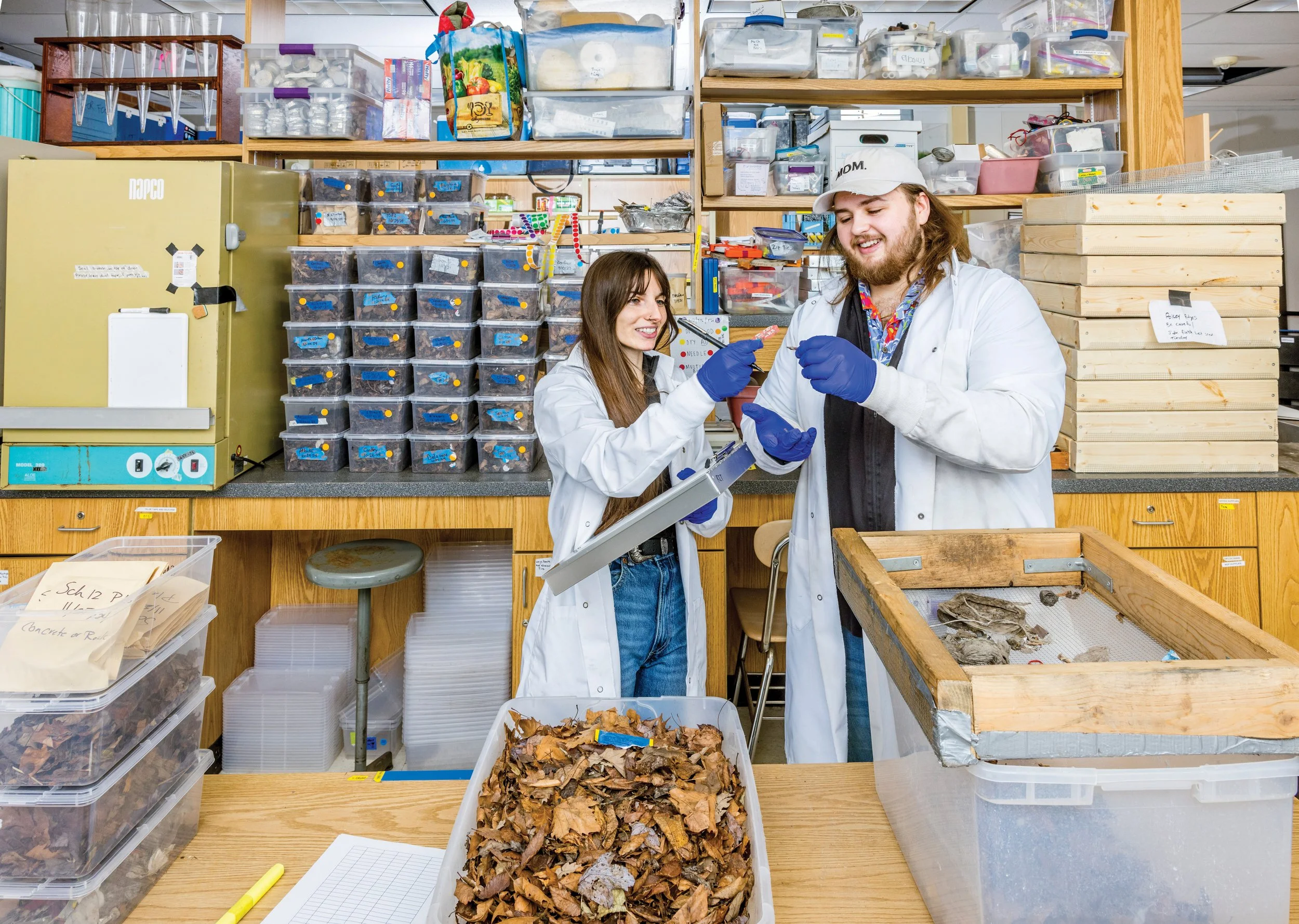
Former graduate students Paige Arieno and Jayson Kucharek carefully catalog the contents of a LittaTrap™. Traci Westcott / RIT
In a lab at the Rochester Institute of Technology (RIT), in Rochester, New York, dozens of plastic bins of cigarette butts, food wrappers, bottle caps, one-shot liquor bottles, and other trash are stacked neatly on shelves, waiting to be sorted and categorized. This debris décor comes from litter-catching mesh devices called LittaTraps™, which have been installed in storm drains across Rochester to intercept garbage otherwise destined for Lake Ontario.
The project is overseen by RIT’s Collaborative for Plastics and the Environment, which estimates that 1,500 metric tons (3.3 million pounds) of plastic pollution enter Lake Ontario every year. Across the entire Great Lakes region, that figure is somewhere around 9,887 metric tons, or nearly 22 million pounds of plastic pollution in the lakes.
The Collaborative for Plastics and the Environment is comprised of a multidisciplinary team of mathematicians, ecologists, biochemists, engineers, educators, students, and other scientists who evaluate the contents of these LittaTraps™ as part of the Community Action for Stormwater Cleanup and Debris Elimination (CASCADE) program.
Once evaluated, these items give researchers a wealth of information about plastic pollution in Rochester and the surrounding areas, allowing them to better understand the source of plastic pollution and which types of plastic are most prevalent in local waterways like Irondequoit Bay and the Genesee River.
Plastic pollution in water can pose health risks to humans and aquatic ecosystems. Stormwater runoff is one of the most common ways for plastic to end up in our waterways. Plastic may harm wildlife, pollute drinking water, release toxic or carcinogenic chemicals, and contaminate nearby food supplies.
LittaTraps™, which were invented by New Zealand-based company EnviroPod, were first installed in Rochester in 2022 with funding from NOAA’s Marine Debris Program. Since then, the Collaborative has partnered with local, regional, and national partners to fund and install dozens of these devices, with more to come. They hope to not only pull plastic out of the sewers but to also educate the public.
“One of the main goals is to use these LittaTraps™ and the stormwater system to connect people with the water cycle,” says Christy Tyler, a professor of environmental science at RIT. “Even if you’re not at the lake, you’re connected to the lake.”
To collect a wide range of data, the LittaTraps™ have been placed strategically in both urban and suburban environments. The goal is to learn more about the factors that determine the type and volume of debris entering the watershed in different areas. A neighborhood’s location, demographics, and proximity to certain kinds of businesses, such as convenience stores or restaurants, are all considered. With this information, scientists can better predict where pollution is likely to enter the stormwater system.
Now, thanks to a new $900,000 grant from the NOAA Marine Debris Program, CASCADE is installing 50 new LittaTraps™ across Rochester and the nearby Town of Brighton to expand the project’s footprint and better educate the public about the nature—and dangers—of plastic pollution.
Nineteen new LittaTraps™ have already been installed, with plans to scale to the full 50 once data from this first round of installations helps identify the most strategic locations. All 50 LittaTraps™ will be monitored by CASCADE through 2027, when their ongoing maintenance will transfer to the local county.
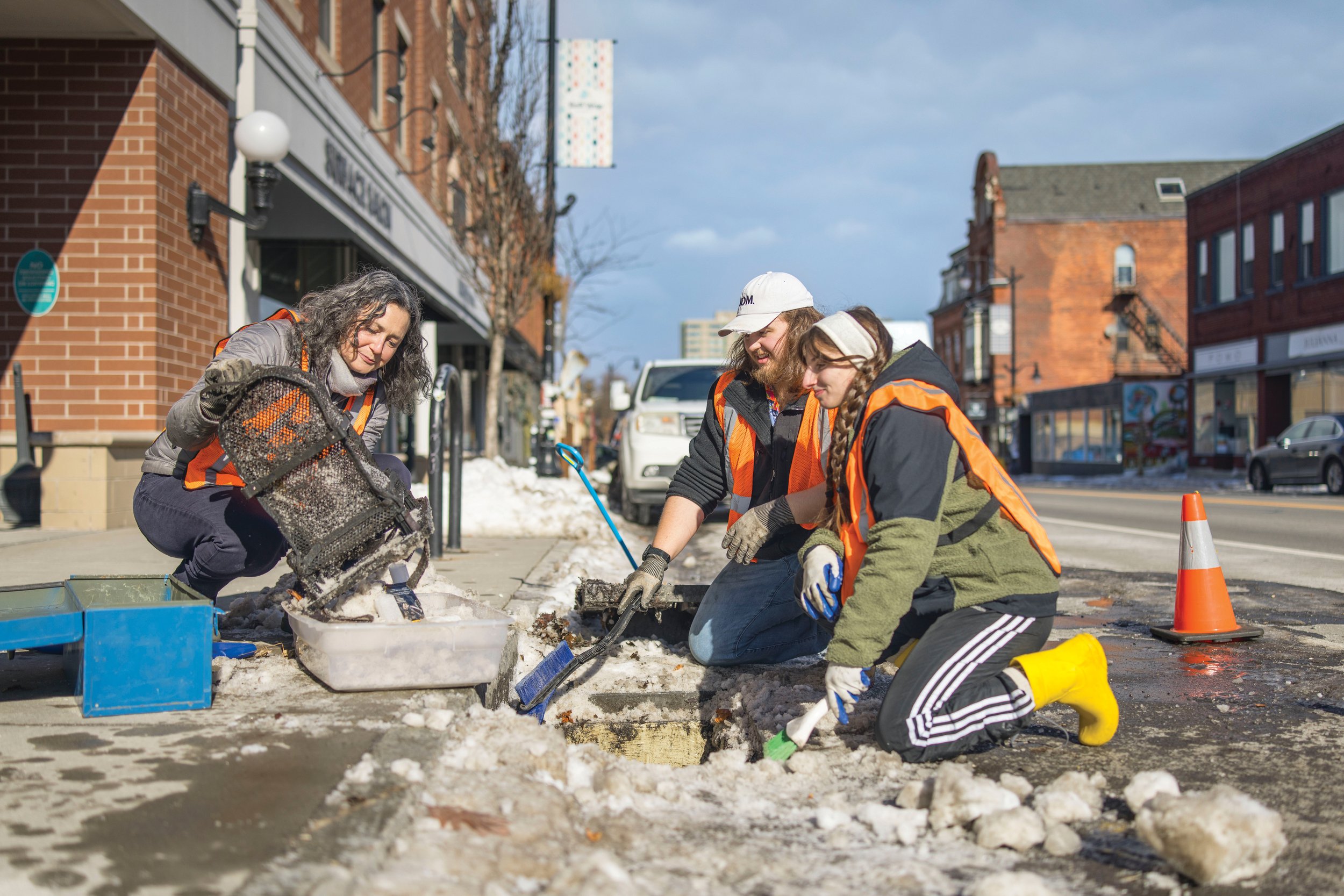
Professor Christy Tyler and former graduate students Jayson Kucharek and Paige Arieno empty the contents of a LittaTrap™ into a bin, which will be taken to the lab at RIT for future study. Traci Westcott / RIT
Tyler stresses that while preventing debris from making its way into Lake Ontario is a major goal for CASCADE, it’s also a lofty one. There are 30,000 storm drains in Rochester, and although CASCADE will soon have installed a total of 73 LittaTraps™ across the city, Tyler acknowledges this will only make a small dent in the amount of pollution entering the lake.
“Hopefully, we're protecting some of the storm drains that are most likely to have a lot of debris going straight to the environment, but it's a combination of creating awareness and doing mitigation at the same time,” she says. “The problem is a people problem, because it comes from people.”
To create lasting change, CASCADE hosts educational programming to increase public awareness and engagement around plastic pollution. At local schools and city-run recreation centers, this takes the form of a 12-week community science curriculum for students, which gives children the opportunity to connect with their natural environment, cultivate a sense of neighborhood stewardship, and gain hands-on experience with environmental science.
Throughout the program, students visit nearby LittaTraps™ to collect samples, which are then cleaned of hazardous materials by scientists at RIT before being returned to the classroom to be categorized by their original use From there, classes might engage in a storytelling activity or develop a marketing campaign around preventing litter in their neighborhoods.
“They can look at the data itself, look for patterns in the data, and figure out what the most common items are,” says Tyler.
Moving forward, CASCADE hopes to expand into other communities, including ones that aren’t located in the Lake Ontario watershed. With funding from the National Sea Grant Office Marine Debris Program’s Community Action Coalition Program, efforts to expand into Buffalo (on Lake Erie) and Syracuse (in the Lake Ontario watershed) are already underway.
Recently, CASCADE researchers also attended an introductory meeting with the Monroe County Stormwater Coalition, comprised of the stormwater managers of every municipality in the county, to lay the groundwork for future partnerships.
Tyler stresses that this work would not be possible without the Collaborative’s partners, which include New York Sea Grant, the City of Rochester, Monroe County, the University at Buffalo, Syracuse University, Rochester City School District, Nativity Preparatory Academy, the Council for the Great Lakes Region, Seneca Park Zoo Society, the Rochester Museum and Science Center, the Water Education Collaborative, and Walking for Rochester.
“The goal is to scale up at a level where it’s likely to make a real difference,” says Tyler. “There’s a goal of having it not be this extractive process where we go in and collect data and leave but [one where we] really have the participation of the community.”