State Revolving Funds Help Keep Water Safe, Clean, and Affordable in Wisconsin
For communities across Wisconsin, access to safe, clean, affordable drinking water is a persistent concern. Lead service lines, aging water infrastructure, and harmful contaminates like nitrates are among the many factors that necessitate extensive—and expensive—repairs to drinking water, wastewater, and stormwater systems throughout the state.
To ensure safe and reliable water, over the next two decades, the state needs an estimated $24 billion to rebuild its water systems: $12 billion for wastewater and stormwater and $11.7 billion for drinking water infrastructure.
To help communities address this need, two federal-state partnerships—the Clean Water State Revolving Fund (CWSRF) and Drinking Water State Revolving Fund (DWSRF)—were founded over thirty years ago to provide financial support for water infrastructure and water quality projects in all fifty states and Puerto Rico.
“Anyone with a public water system can apply to finance their infrastructure projects through SRFs,” says Joe Fitzgerald, policy and advocacy director at Milwaukee Water Commons. “They are one of the most affordable options available, helping families get clean water without huge increases to their water bills.”
In Wisconsin, these funds are distributed via the state-led Clean Water Fund Program (CWFP) and Safe Drinking Water Loan Program (SDWLP). Together, the CWFP and SDWLP provide funding for the systems that bring clean water into buildings, ferry wastewater to water treatment plants, and manage stormwater from heavy rains.
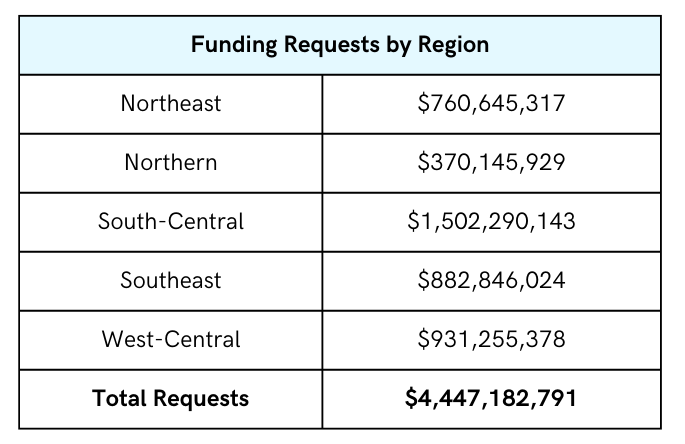
Fitzgerald says these programs are substantial contributors to the health and well-being of Wisconsin communities. Hundreds of communities across the state apply for SRF funding each year. In 2026 alone, Wisconsin’s SRF project priority list contains over a thousand projects, with requested funds totaling nearly $4.5 billion.
“There are very few municipalities that are not actively pursuing some kind of financing for water infrastructure,” says Fitzgerald. “When representatives vote on funding SRFs, they need to consider the impact on the people in their own districts.”
Aging water infrastructure threatens public health
Without SRF funding, municipalities across Wisconsin would still face costly repairs and upgrades to their aging water infrastructure. However, rather than being able to subsidize these projects with state and federal dollars, they would instead be forced to pass the costs on to ratepayers in the form of elevated monthly water bills.
“For many people who can't afford to see an increase to their water bill, especially one that is very large, the State Revolving Funds are truly an asset to be able to help municipalities cover those costs,” says Fitzgerald.
Although SRF funding doesn’t typically eliminate water rate hikes completely, it helps keep increases more manageable by spreading project costs over an extended timeline, making it possible for communities to take on projects that would otherwise be out of reach.
The SRF program also offers principal loan forgiveness for projects in “disadvantaged communities,” those facing significant economic barriers based on state-designated affordability criteria. Disadvantaged communities comprise 812 of the 908 community water systems in Wisconsin.
In the Village of Grantsburg (WI-07), for example, extensive upgrades to the Grantsburg Sewer Plant were a topic of debate for over two years before the village received $5.4 million from the CWFP in 2025. Because Grantsburg meets the state criteria for a disadvantaged community, the village is eligible for $2.1 million in principal loan forgiveness, which will help keep water rates lower for residents as the community pays off the remainder of the loan.
The project will replace infrastructure that dates back to 1989 and no longer complies with state regulations, including upgrades to a lift station, a water storage lagoon, and an automatic chemical feed system.
Although the price tags on these projects can seem overwhelming, Fitzgerald stresses that ignoring these infrastructure challenges can create issues with water quality and public health that end up costing communities even more money.
“Every year we defer those kinds of projects, that bill gets larger,” says Fitzgerald. “The need is urgent. In many instances, these are not emergencies we can delay and address later.”
In Grantsburg, during the two years between original project estimates on the sewer plant upgrades in 2023 and the eventual decision to pursue the project in 2025, the cost of the upgrades rose more than a million dollars.
Delaying water infrastructure projects can also result in expensive public health emergencies. In August 2025, the Village of Williams Bay (WI-01) in Walworth County sent out an alert warning residents that their tap water was unsafe for drinking, cooking, or brushing their teeth due to high levels of nitrite and nitrate contamination. Following the alert, village officials authorized $100,000 in emergency bottled water supplies to be distributed to neighborhoods, schools, and hospitals in the area.
The alert came on the heels of a confirmed case of blue baby syndrome, a life-threatening medical condition in infants caused by elevated nitrate levels in drinking water.
Nitrates typically make their way into groundwater from sources like fertilizers, manure, and leaky sewer systems. In addition to blue baby syndrome, nitrate contamination can cause cancer, thyroid disease, pregnancy complications, and birth defects.
Situations like these have prompted Walworth County to tackle multiple water infrastructure projects using CWFP funds, including $6.5 million to construct a new force main at Pump Station No. 2 in Williams Bay, $8 million to remove and replace an important local clarifier, and $1 million for HVAC and roof improvements at a water reclamation facility.
“There are a lot of risks when communities can not access these funds, Fitzgerald says. “These projects directly impact public health.”
SRF funding helps Wisconsin communities thrive
Water infrastructure improvements not only save communities money by reducing household bills, but also by reducing the need for medical care after exposure to contaminated waters. In Wisconsin, lead poisoning remains a prominent example. Across the state, there are an estimated 150,000 lead service lines in need of replacement.
Tasteless, colorless, and odorless, lead in drinking water in any amount can cause brain damage, nerve disorders, fertility problems, and kidney issues. Severe lead poisoning can lead to coma, seizures, and death.
Because children absorb lead at up to 10 times the rate of adults, they are at particular risk for lead poisoning. More than 200,000 Wisconsin children were diagnosed with lead poisoning between 1996 and 2016, making Wisconsin 10th in the nation for cases of lead poisoning in children.
Under the U.S. Environmental Protection Agency’s Lead and Copper Rule, states must now take steps to replace all lead pipes by 2037. In 2025, the SDWLP Lead Service Line Replacement Program authorized more than $159 million in funding for 47 lead service line replacement projects in 29 municipalities across Wisconsin. Although SRF projects typically take place on public property, the Lead Service Line Replacement Program allows municipalities to use SRF funds to replace lead service lines connected to private residences.
Among these upcoming lead service line replacement projects is a $733,150 project in the City of Thorp (WI-03). Since 2013, Thorp has been flagged for more than two dozen Safe Drinking Water Act violations in a variety of categories, including monitoring and reporting violations, treatment technique violations, and public notice violations, all of which can incur costly fines and put the health and safety of Thorp residents at risk.
With this loan, Thorp will be able to replace lead service lines throughout the community, removing the risk of lead poisoning at its source and eliminating a source of contamination that requires remediation and public notice.
Another public health hazard addressed by SRF funding are sanitary sewer overflows (SSOs). Sanitary sewers are responsible for transporting human waste, along with some stormwater and groundwater, to water treatment facilities. Occasionally, communities experience SSOs that release raw sewage into the environment.
Heavy rain, blockages, line breaks, sewer defects, and power failures are all potential causes of SSOs, which can result in water quality problems, sewage back-ups, property damage, and serious risks to public health, including viral, bacterial, and parasitic infections.
The EPA estimates that communities across the United States experience between 23,000 and 75,000 SSO each year, not including sewage backups into buildings. One way to reduce this number is by replacing or upgrading existing sanitary sewers and their surrounding infrastructure.
In the Village of Pulaski (WI-08), $677,000 from the SDWLP will help replace a sanitary sewer outside the Pulaski Water Plant on Williams Street. Located in a residential area, the project will protect nearby properties and drinking water sources by replacing 1,650 feet of 8-inch sanitary sewer pipes. Additional funding has been allocated to replace nearby water mains.
“There are unreported savings from families not having to pay medical bills or manage health challenges, cover property damage, or deal with some of the other challenges associated with these kinds of infrastructure failures,” says Fitzgerald. “That’s a big economic impact on top of the improvements for the safety and health of our communities.”
The future of Wisconsin’s water
Whether through updating outdated infrastructure, removing dangerous contaminates, or building new water systems, SRF funding helps Wisconsin communities prepare for the future.
“There’s a water access gap in our country. More than 2,000,000 Americans live without basic access to safe drinking water and sanitation,” says Fitzgerald. “These programs are a part of the solution to that problem.”
In communities with growing populations, SRF funds connect more residents to public utilities through the construction of wells and other vital infrastructure. For example, in the City of Altoona (WI-03), population growth has led to increasingly frequent water shortages and restriction notices over the last decade. To accommodate new residents, several new public wells have been built since the early 2020s. Altoona’s eighth and ninth public wells were completed in 2023, and in 2025, the city received $200,000 from the SDWLP to construct its tenth public well.
Moving forward, Fitzgerald is hopeful that SRF funding will continue to help both rural and urban Wisconsin communities of all sizes access water that is safe, clean, and affordable.
“We need the federal government to continue investing in SRF programs,” he says. “To do that, we must help our representatives understand the urgency of this funding in each of their districts and all of the benefits that go with it.”