
As of March 2026, it’s no longer considered safe for children or pregnant people to eat wild-caught walleye larger than 18 inches from the state of Minnesota.
This announcement—one of several fish consumption advisories updated by the Minnesota Department of Health this spring—aims to protect the more than 1.7 million people who fish in Minnesota waters each year from elevated levels of mercury in local fish populations.

Paula Maccabee, executive director and council at WaterLegacy. Photo courtesy of Paula Maccabee.
For Paula Maccabee, executive director and counsel at the Minnesota-based environmental advocacy organization WaterLegacy, the presence of elevated mercury levels in local fish comes as no surprise. Since 2009, WaterLegacy has protected Minnesota waters from environmental degradation by advocating against the environmental mismanagement of local mining operations, which are a significant source of mercury contamination statewide.
The Minnesota Pollution Control Agency (MPCA) has determined that more than half of the total mercury emissions in Minnesota come from taconite processing plants, which produce taconite pellets primarily used in the steel industry. Currently, there are eight taconite processing plants in the United States. Six of them are in Minnesota.
Taconite processing plants produce airborne mercury emissions and taconite mines produce waterborne sulfate emissions, the latter of which react with bacteria in environments like wetlands and lake beds to change mercury to methylmercury. Methylmercury is a dangerous neurotoxin that can bioaccumulate in wildlife like fish and travel up the food chain to cause serious cognitive and reproductive harm in humans, including lifelong nervous system, intellectual, and developmental disabilities. Children are approximately four to five times more sensitive than adults.
“Once the mercury has had its effect on the brain, that change is there and it's permanent,” says Maccabee. “High levels of mercury can result in neurological defects that carry over to the next generation.”
That’s where fish consumption advisories like those recently updated by the Department of Health come in.
“What we’re doing [by releasing mercury into the environment] is taking a healthy, wild-caught food and making it something that people are prohibited from eating,” says Maccabee. “Walleye are one of Minnesota’s most prominent fish. They tend to live longer and bioaccumulate more methylmercury than other species, but there are many fish of all kinds in lakes, streams, and rivers that have serious restrictions.”
In addition to walleye, other species with “Do Not Eat” restrictions for sensitive populations—such as children, pregnant people, and people who may become pregnant— include northern pike larger than 26 inches and muskie of any size.
For numerous Minnesota communities—including Indigenous, low-income, and immigrant communities—sustenance fishing is a source of food and cultural connection, says Maccabee. When local fish become so contaminated that eating them is unsafe, these communities lose access to vital sources of nutrition. The local recreation and fishing industries, which contribute nearly $14 billion to Minnesota’s economy each year, also suffer.
To protect local economies, public health, and the environment, Maccabee says reducing mercury emissions and sulfate discharge from taconite mining is essential.
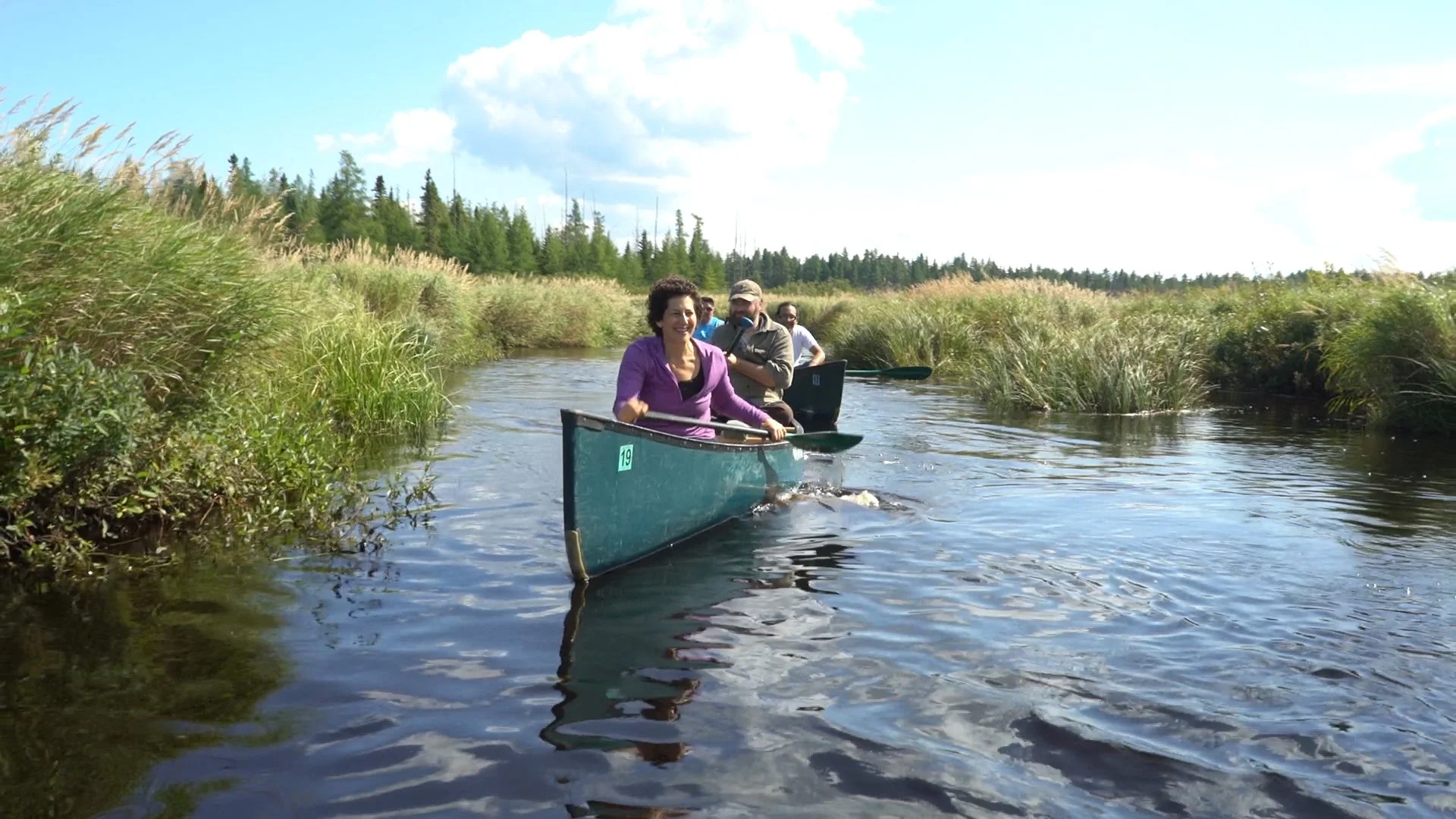
Maccabee and others out on the Partridge River in Minnesota. Photo courtesy of Paula Maccabee.
Although the Environmental Protection Agency (EPA) has implemented mercury emission limits for other manufacturing categories over the years, mercury emissions from the taconite industry remained federally unregulated until 2024, when the EPA finalized amendments to the National Emission Standards for Hazardous Air Pollutants (NESHAPs). These amendments were expected to reduce annual mercury emissions by about 33%.
While this reduction would be a step in the right direction, Maccabee says it isn’t enough. She agrees with a letter released by the MPCA in 2023, which argues that the EPA’s rule would not be enough to reduce mercury to levels where Minnesota fish are safe to eat.
In 2007, the MPCA set a goal to reduce statewide mercury air emissions to less than 789 pounds per year—the threshold necessary to meet water quality standards and reduce contamination in fish—by 2025. That goal has not yet been achieved.
In 2023, mercury emissions in Minnesota reached 1,188 pounds. Even with a reduction of 33%, Minnesota would still see around 941 pounds of mercury emissions per year. For the good of Minnesotans’ health and the environment, Maccabee would like to see the Minnesota Pollution Control Agency take a stronger approach without waiting for the federal government.
“The taconite mines that we have now need to control their emissions,” she says. “And that doesn’t mean they should be shut down. To the contrary, investments should be made to ensure they can continue without harm to the community—and those investments should require best available control technology.”
Best available control technology is often comprised of equipment like scrubbers, which remove dust and toxic fumes from the air. If employed properly, this technology can achieve an impressive 85% reduction in mercury air emissions from the taconite industry.
“Minnesota would suddenly attain our mercury emissions target using available technology,” says Maccabee. “Mercury from taconite plants is that big of a factor.”
When the EPA finalized its NESHAPs amendments in 2024, it gave taconite facilities until 2027 to comply. However, a 2025 proclamation by the Trump administration extended this timeline by two years, meaning the soonest Minnesotans will see these changes is 2029. Announcements from the Trump EPA suggest that within those two years, it is likely the EPA will undo its own taconite emissions control rule. If this is the case, it will be even longer before Minnesotans realize the public health, economic, and environmental benefits of reduced mercury emissions.
Despite the loss of EPA support for mercury reduction, WaterLegacy plans to continue advocating for better protections against mercury contamination. Ensuring that the fish are safe to eat is also a major priority for Tribal governments, including the Fond du Lac and Grand Portage Bands of Lake Superior Chippewa.
“If we really want to solve the problem, we need the best science, the best testing, and the most transparency,” says Maccabee. “People talk about preserving the wilderness, and that's a beautiful goal, but it’s also about preserving the irreplaceable value of water you can drink and fish you can eat.”
For now, the onus of avoiding mercury contamination falls on individual residents and tourists. Keeping apprised of fish consumption advisories is the best way for anglers to avoid contaminants and make informed health decisions for themselves and their families. The Minnesota Department of Health’s Fish Consumption Guidance webpage offers up-to-date advisories for both sensitive and non-sensitive groups.