
Lake Erie isn’t just Ohio’s Great Lake, it’s an economic engine for the state, with Ohio now home to one of the largest charter fishing fleets in the region. With about 945 captains, Ohio’s charter boat industry generates an estimated $14.6 million annually through fishing trips, pleasure cruises, and other excursions that encourage Ohioans and visitors alike to connect with one of the state’s greatest natural and economic assets.
Industry and environment go hand in hand
Fisherman Jerry Able, a resident of Marblehead, Ohio, has been a charter boat captain for more than 50 years. He first received his charter license, which allows him to sail with up to six passengers, in 1975. Fishing on the lake has been his full-time job ever since.
“I’m probably the only full-time fisherman that’s been in it this long,” says Able, who dreamed of becoming a professional skipper from age five. “Fishing is my life, it’s my income, and it’s why I’m still here.”
For Able, an average day on the water with customers means starting early to search for healthy fish populations such as walleye, yellow perch, and smallmouth bass near Lake Erie’s Bass Islands, which includes South Bass (Put-in-Bay), Middle Bass, and North Bass islands.
Across his many years of boating, Able has seen water quality, fish populations, and the charter industry itself experience plenty of ups and downs. Severe fish population decline, the infamous Cuyahoga River fire of 1969, and the extinction of the blue pike in the 1970s all underscored the beginning of Able’s career. A founding father of the Lake Erie Charter Boat Association, Able knows the health of Lake Erie and the strength of the charter boat industry go hand in hand.
Although Able observed the vitality of Lake Erie rebound after the Great Lakes Water Quality Agreement of 1972—which sought to remedy environmental issues like pollution, toxic algal blooms, and declining fish populations across the Great Lakes—he has now seen some of those struggles return. These environmental concerns impact water quality and result in population decline for species such as yellow perch.
They also contribute to the warming of Lake Erie’s waters, which may cause fish like walleye to migrate to colder parts of the lake earlier in the season. These changes have made charter fishing trips increasingly difficult at certain times of the year, says Able, and have begun to affect his business.
“Now, once it’s time to go out there, you can’t catch enough fish to feed a hungry cat,” he says. “After June, there’s a big reduction in mature fish. When I lose my mature fish population, I'm hampered.”
Despite early migration causing issues for fishermen near the Bass Islands, local walleye populations hit a record 180 million in 2025. These impressive numbers have contributed to the boom in Ohio’s more than $1 billion sports fishing industry.
More than just fishing
The state’s $1.3 billion recreational boating industry, which includes activities other than fishing, is also growing.
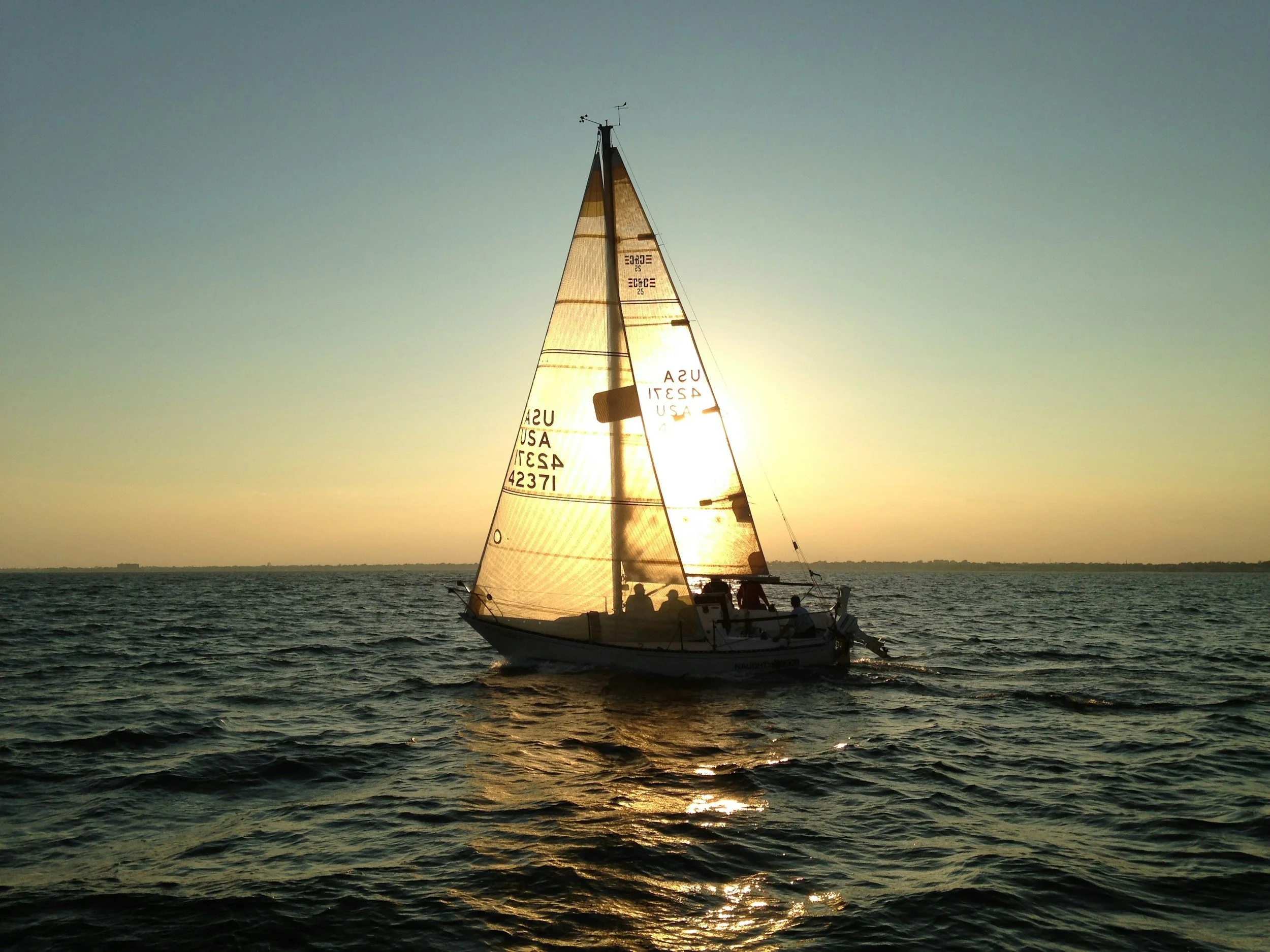
To keep up with demand, Jeff Geisinger, owner/operator of Verktadue Sailboat Charter out of Cleveland, offers services for those who are interested in going out on the lake but don’t consider themselves anglers, such as swim parties, marriage proposals, engagement photo shoots, and sightseeing for special events like fireworks and meteor showers.
For the last three years, he has also offered memorial services, which have become increasingly popular. These voyages provide families with an opportunity to lay the cremated remains of loved ones to rest on Lake Erie alongside fruit, flowers, and other biodegradable materials.
“It’s an age-old tradition,” says Geisinger. “People contact me because grandpa was a fisherman or the deceased made mentions of a [burial “at sea”] in their final wishes.”
Geisinger says protecting the environment is of the utmost importance during a memorial service. He stresses that there’s no environmental impact to releasing cremated remains into the water. Recently, he advised the Ohio Environmental Protection Agency on the best ways to expand access to these services while prioritizing environmental stewardship.
“Every step of the way, we try to make sure if we’re putting something in the water that it’s biodegradable and not going to compound any issues or add any debris,” he says.
Environmental threats remain
Both Geisinger and Able keep a watchful eye on environmental issues affecting the lake. Although Geisinger says he’s happy with the health of Lake Erie overall, he remains concerned about toxic algal blooms, in particular. Able agrees.
In addition to causing fish kills by reducing oxygen in the water, toxic algal blooms impact tourism, which comprises about 20% of the fishing traffic on Lake Erie. In 2025, tourism in the eight Ohio counties bordering the lake generated $20.6 billion in economic activity.
“Nobody wants to go swimming in that green algae crap, and it’s a health hazard,” says Able. “I have some customers who get headaches and breathing issues. A couple of them even get nauseated.”
Exposure to toxic algal blooms can pose serious health concerns for humans, pets, and fish, including respiratory, gastrointestinal, and skin conditions. Able, who has been diagnosed with COPD, struggles to go out on the water when algal blooms are at their worst.
“I have to go on some pretty strong medicine,” he says.
Moving forward, Able plans to continue spreading the word about the value of the charter boat industry via his advocacy work with the Lake Erie Charter Boat Association and the Fish Ohio program, which highlights Lake Erie as a natural, social, and economic resource by providing free fishing trips to Ohio state legislators each year.
If improving Lake Erie’s water quality remains a priority, Able is confident that local fish populations will thrive and strengthen the charter boat economy for years to come.
“What keeps our business going is people coming up to the lake and saying, ‘We caught a bunch of fish, and it was wonderful,’” he says. “That’s what puts people in those boats: having a good time.”