
For the first time in over a century, lake sturgeon have returned to Ozaukee County, Wisconsin. Earlier this spring, the Wisconsin Department of Natural Resources (DNR) identified a three-year-old male lake sturgeon traveling through the Mequon-Thiensville Fishway, the farthest north a lake sturgeon has been spotted since these prehistoric fish disappeared from the Milwaukee River in the late 1800s.
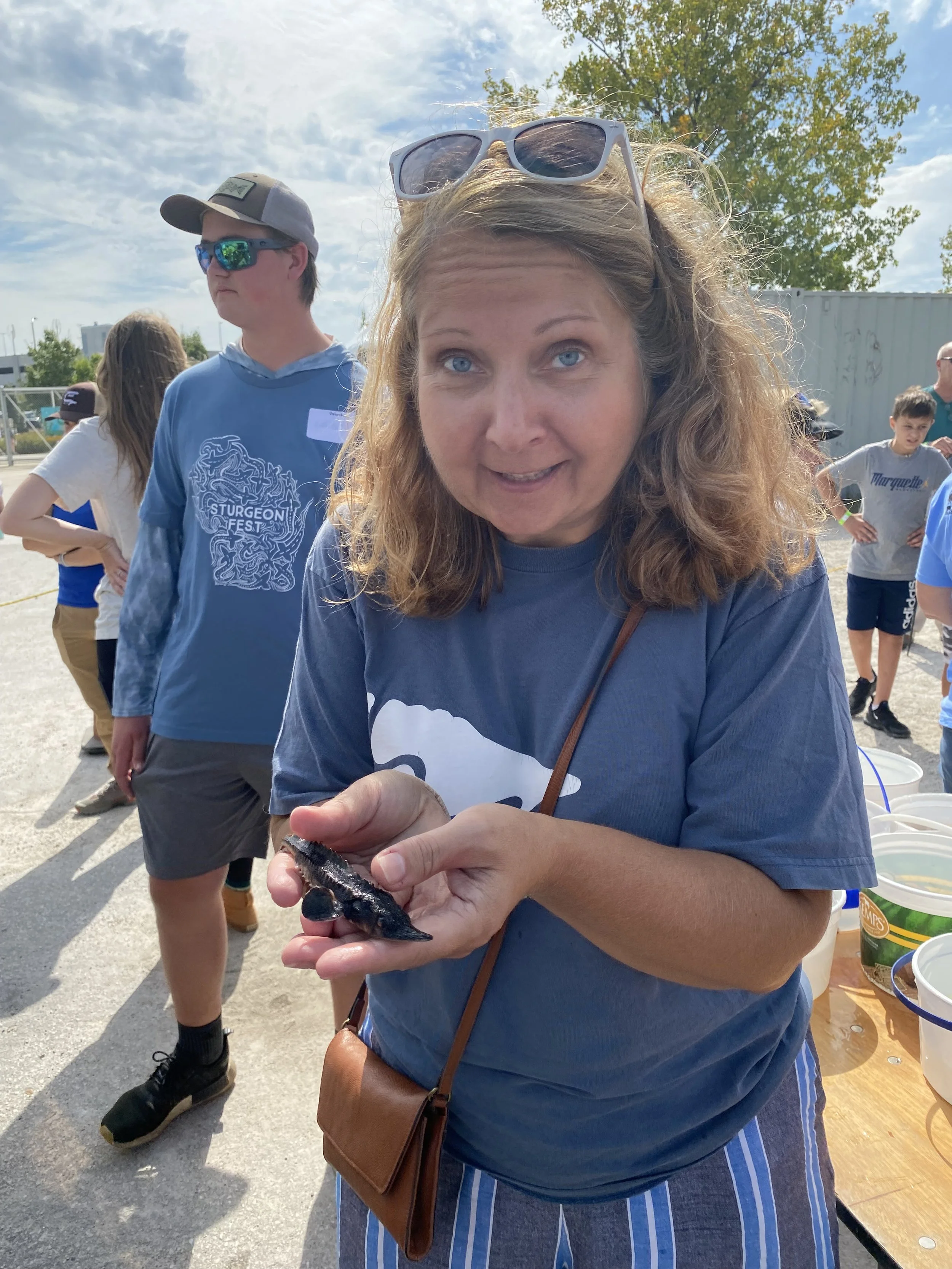
Cheryl Nenn with a baby sturgeon. Credit: Cheryl Nenn
Lake sturgeon are native freshwater fish that can grow up to nine feet long, weigh up to 300 pounds, and live over 100 years. Habitat degradation, dam construction, industrial pollution, and overfishing have all contributed to their disappearance from the Milwaukee River, which flows through seven Wisconsin counties before connecting with Lake Michigan in Milwaukee County, just south of Ozaukee County
“Sturgeon were not valued fish,” says Cheryl Nenn, who works with the community-led environmental advocacy organization Milwaukee Riverkeeper to return sturgeon to the river. “[People] would catch them and throw them on the land. They would burn them for fuel.”
For more than 20 years, the DNR, Ozaukee County, Milwaukee Riverkeeper, Tribal communities, and other partners have worked to make the Milwaukee River a place for lake sturgeon to thrive. Projects have included habitat restoration, dam removals, fish passage structures, and more than $500 million in completed and planned dredging projects near downtown Milwaukee to remove polluted sediment from a historically industrialized area known as the Milwaukee Estuary Area of Concern.
“Coupled with that, there have been big improvements in water quality,” says Nenn. “A lot of that is due to upgrades to sewage treatment. Improvements in stormwater management have also played a big role.”
To help population numbers recover, the DNR stocks the river with lake sturgeon. Since 2006, more than 22,000 sturgeon have been reintroduced to the river via these efforts. Today, these sturgeon are raised in a stationary trailer at a nature sanctuary called Riveredge Nature Center in Newburg, Wisconsin, about 35 miles north of Milwaukee. There, sturgeon eggs sourced from the nearby Wolf River are nurtured by fish biologists until the fish grow to about the size of a human’s hand. Once large enough, they’re tagged and released into the river during an event called Sturgeon Fest, which is hosted in downtown Milwaukee each September.
“The Milwaukee River water [continuously] comes into the trailer, over the fish, and goes back out,” says Nenn. “Sturgeon will imprint on water where they grow up, and they’re being grown in a trailer, so DNR wanted to make sure they’re imprinting on Milwaukee River water.”
Released sturgeon typically remain close to downtown Milwaukee for a few years before they make their way out to Lake Michigan, where they will spend the majority of their lives, only returning to the Milwaukee River to spawn.
“We don’t know where they go,” says Nenn. “The exciting thing is that they’re coming back.”
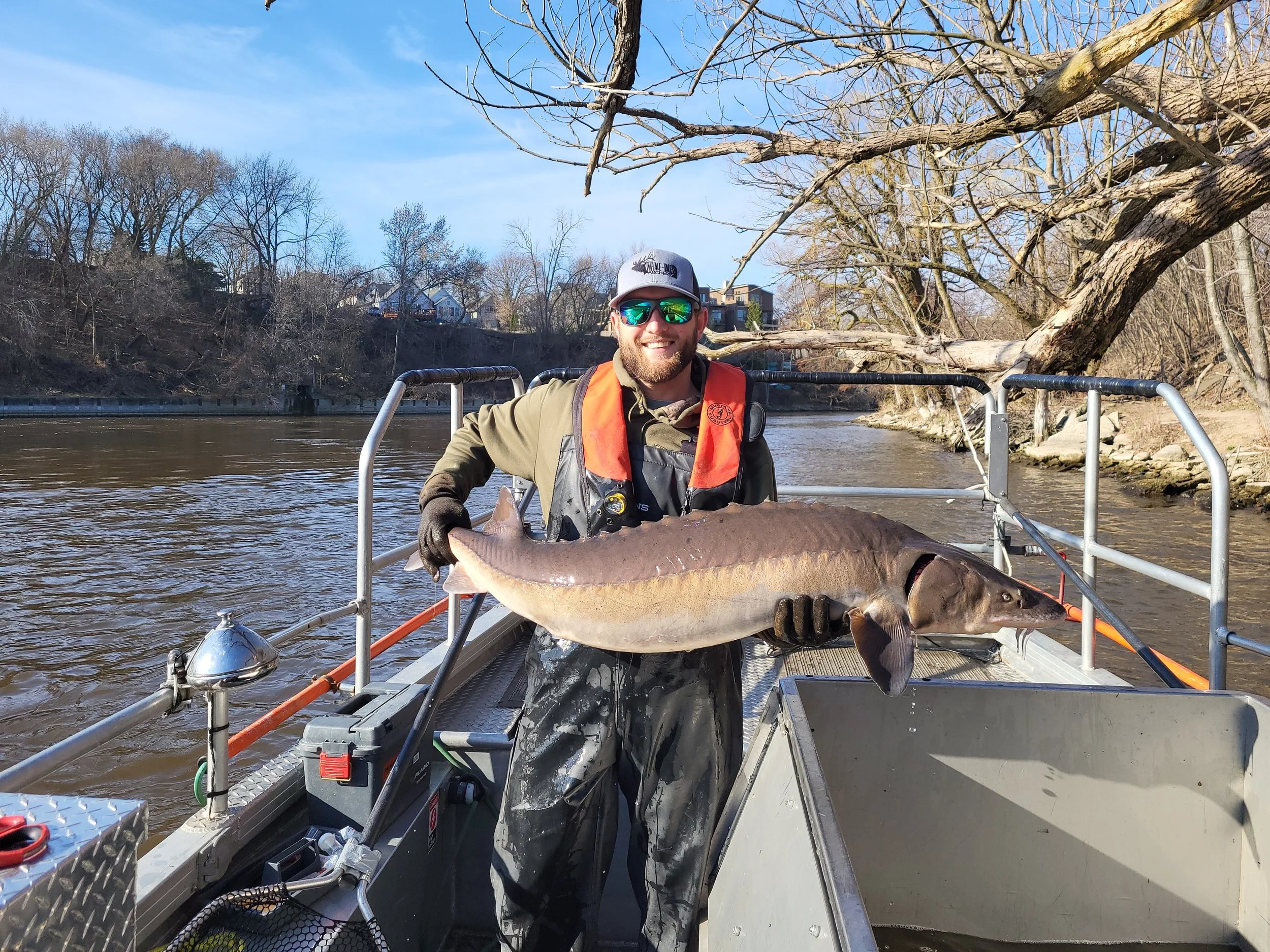
A sturgeon caught on the river. Credit: Wisconsin Department of Natural Resources
Last year, about 70 sturgeon returned to the Milwaukee River, 45 of which were tagged with trackers from their origins with the DNR. Nenn says these numbers are a great sign. The next step will be to encourage the sturgeon to reproduce. So far, all returning sturgeon have been male, making spawning impossible.
“Male sturgeon reproduce at around 15 [years old], but we’ve had some as young as 12 that are coming back to the river,” says Nenn, who adds that female sturgeon reproduce around age 20, and then only reproduce every few years. “Hope springs eternal every year. We hope that this is the year we get females.”
On the heels of last year’s success, spotting a sturgeon at the Mequon-Thiensville Fishway earlier this spring was a huge win for revitalization efforts. Previously, dams and undersized fish passages prevented sturgeon from reaching this part of the river, about 25 miles north of Milwaukee. To remedy this, the DNR, Ozaukee and Milwaukee counties, the Milwaukee Metropolitan Sewerage District, Milwaukee Riverkeeper, and many other project partners have removed 11 dams and completed numerous fish passage expansion projects in the Milwaukee River Basin in the last few decades.
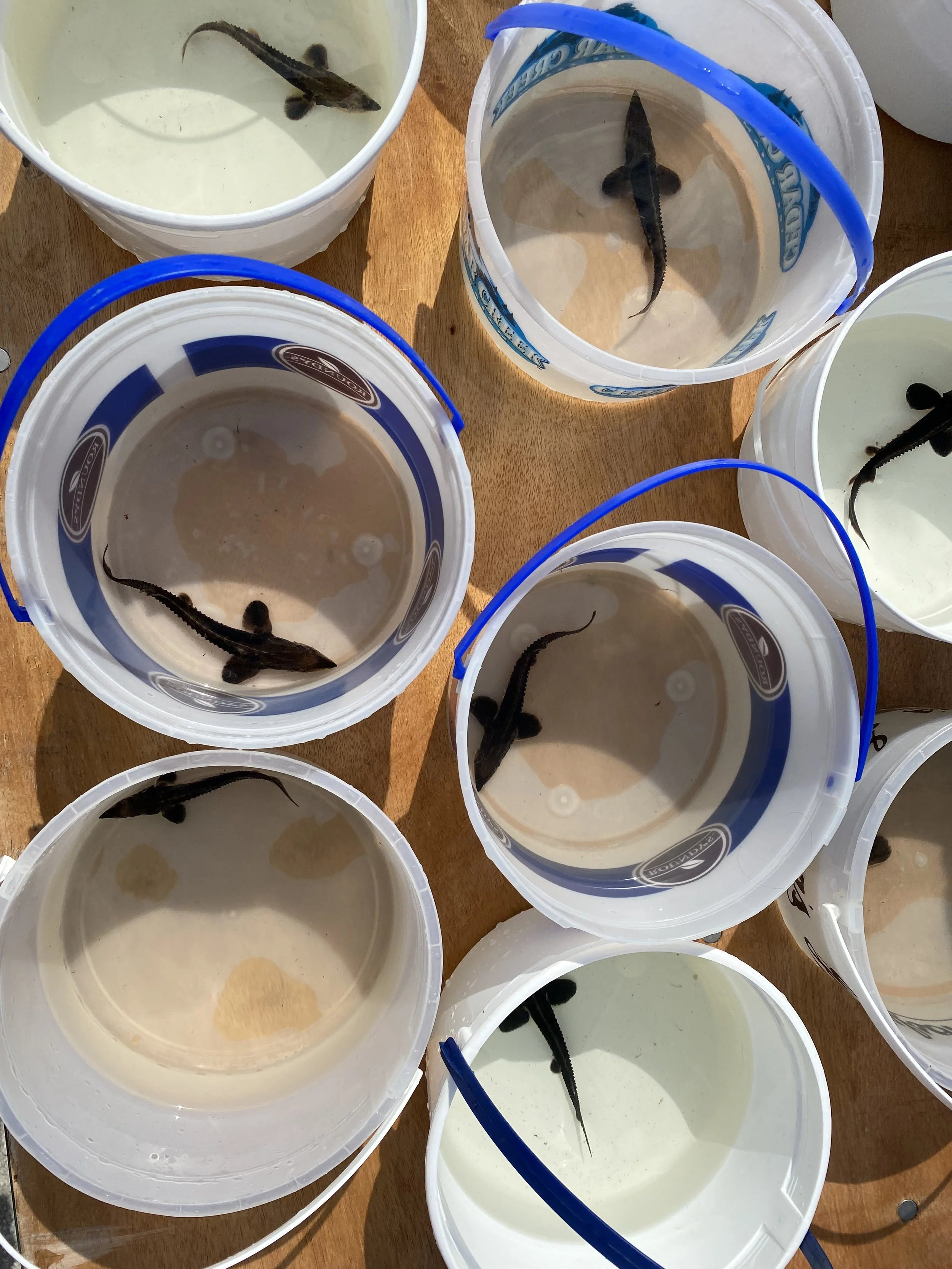
Baby sturgeon. Credit: Cheryl Nenn
Without these obstructions, sturgeon can now access the rocky, shallow habitats they need in order to spawn, which are largely located upstream of the dredged river sections in downtown Milwaukee.
“The upstream portion of our watershed is like a sturgeon paradise,” says Nenn. “The females, when they come up to spawn, will dump their eggs in these little rocky crevices. When [the sturgeon are] very small, they attach themselves to rocks.”
During this vulnerable period, baby sturgeon are unable to swim. If they drift into mucky areas where they can’t attach to rocks, they die.
Direct human interference can also pose a risk to growing sturgeon populations at spawning grounds, including poachers who seek to use sturgeon eggs to produce caviar, inexperienced fishermen who may not know that fishing sturgeon is illegal in the Milwaukee River Basin, and curious passersby who see large fish near the shore and want to investigate.
To protect these creatures during their time in the river, Milwaukee Riverkeeper has helped establish a group called Sturgeon Protectors, which is largely comprised of residents who are interested in educating others about sturgeon. So far, the Sturgeon Protectors have produced educational videos, developed curricula for local classrooms, tabled at community events, and organized patrols near potential spawning grounds. Sturgeon Protectors is led by local Native American leaders, many of whom regard sturgeon as sacred relatives.
“It’s very important to them that the sturgeon are protected on their way home,” says Nenn.
The sturgeons’ return to the Milwaukee River also has ecological benefits. As bottom-feeders, sturgeon improve the cleanliness of river habitats. They also reduce populations of invasive species, such as round gobies, by eating them.
“They’re some of the earliest fish that come into the river system, and they provide a lot of food for other wildlife,” says Nenn. “They bring nutrients into the river early on, as the ice is just melting, so they’re very important ecologically.”
Moving forward, the plan for continued population growth for lake sturgeon in the Milwaukee River is simply to stay the course, says Nenn. The DNR will continue stocking sturgeon until a self-sustaining population is formed, and environmental improvements will continue to take place in downtown Milwaukee and beyond.
“The next big celebration will be when we have confirmed spawning. Hopefully that happens soon,” says Nenn. “It’s all work that’s going to keep moving forward, this year and for many years in the future.”