
An economic revival is underway across the Great Lakes region, says John C. Austin, Great Lakes economic policy shaper and former Michigan state elected official. Communities formerly hollowed out by heavy pollution, outdated infrastructure, and more than fifty years of population decline are once more becoming dynamic places to live, work, and recreate.
Austin believes this transformation is thanks to new waterfront redevelopment and public access initiatives, and ongoing investment in environmental remediation projects, which restore native habitats and remove contaminants from soil and surface water. Once completed, these projects help preserve, protect, and facilitate public access to the Great Lakes as the region’s most famous and influential resource. As the world’s largest freshwater system, the Great Lakes contain over 20% of the world’s fresh surface water—and over 90% of the fresh surface water in the United States.
Austin, a senior fellow at the Eisenhower Institute at Gettysburg College and nonresident senior fellow at the Brookings Institution, has long studied the relationship between economic opportunity and the Great Lakes. He founded the Great Lakes Economic Initiative at the Brookings Institution in 2006 to explore the history, strengths, and weaknesses of the region that ushered America into an era of prosperity and innovation during the Industrial Revolution.
“All the industries that powered America's might in the 20th century were born in the Great Lakes region,” says Austin.
Oil, aviation, steel, and chemical manufacturing, alongside the retail sales era of Sears and Montgomery Ward, ensured residents of the Great Lakes states had stable career trajectories, comfortable income, and a thriving economy. This boom continued until manufacturing competition in the 1950s–70s began to take its toll. Soon, the region’s loss of traditional factory jobs left communities without reliable means of economic growth.
Only in the last decade has data from the Great Lakes region begun to tell a different story. As Austin puts it, rather than a monolithic “ailing Midwestern factory town” motif, the Great Lakes region now enjoys a globalized, high-tech knowledge economy in most major metropolitan areas. Smaller cities, too, are beginning to see the fruits of these investments.
“People are feeling very differently about their futures,” says Austin. “Communities that lost tens of thousands of jobs in traditional industry are now growing again.”
Research conducted by the Great Lakes Economic Initiative in 2007 sparked Austin’s belief that these dramatic changes are largely a function of Great Lakes restoration efforts. When Austin started his work to accelerate economic transformation across the region, the Great Lakes Restoration Initiative (GLRI)—a proposed $20 billion federal funding program to restore Great Lakes ecosystems—was then “languishing in Congress,” he says.
At this critical juncture, analysis and policy recommendations from the Great Lakes Economic Initiative helped unleash the economic potential of investing in the region’s vast water resources and resulted in an impressive and oft-cited statistic: Each dollar spent on Great Lakes restoration projects unlocks an additional three dollars in economic activity.
This powerful economic benefit is thanks to what Austin calls “the blue economy,” a term he coined to explore “the way water, access to water, and water innovation contribute to economic growth, jobs, and businesses.”
“When you clean up lakes, harbors, and waterfronts, you can have multimodal redevelopment along them—parks, commercial development, people wanting to live there,” he says. “You can benefit economically by people, recreation, tourism, and lifestyle spending.”
As water resources become rarer, Austin believes the Great Lakes will help ferry their region into a vibrant new economic era—particularly if valuable water resources are adequately cared for and preserved.
“[The Great Lakes region is] one of the few sustainable platforms for people to live and for companies and businesses to operate on Earth because we have this amazing asset,” he says. “The climate risk is now making it both cheaper and more attractive [in the Great Lakes region].”
In the years since Austin’s initial research, numerous Great Lakes cities have made impressive strides in leveraging the blue economy. Among these cities are Milwaukee, Wisconsin; Detroit, Michigan; and Buffalo, New York. By cleaning up their most degraded areas, these communities have created thriving lakeshore business districts, helped people reconnect with nature, and laid the groundwork for population growth into the future.
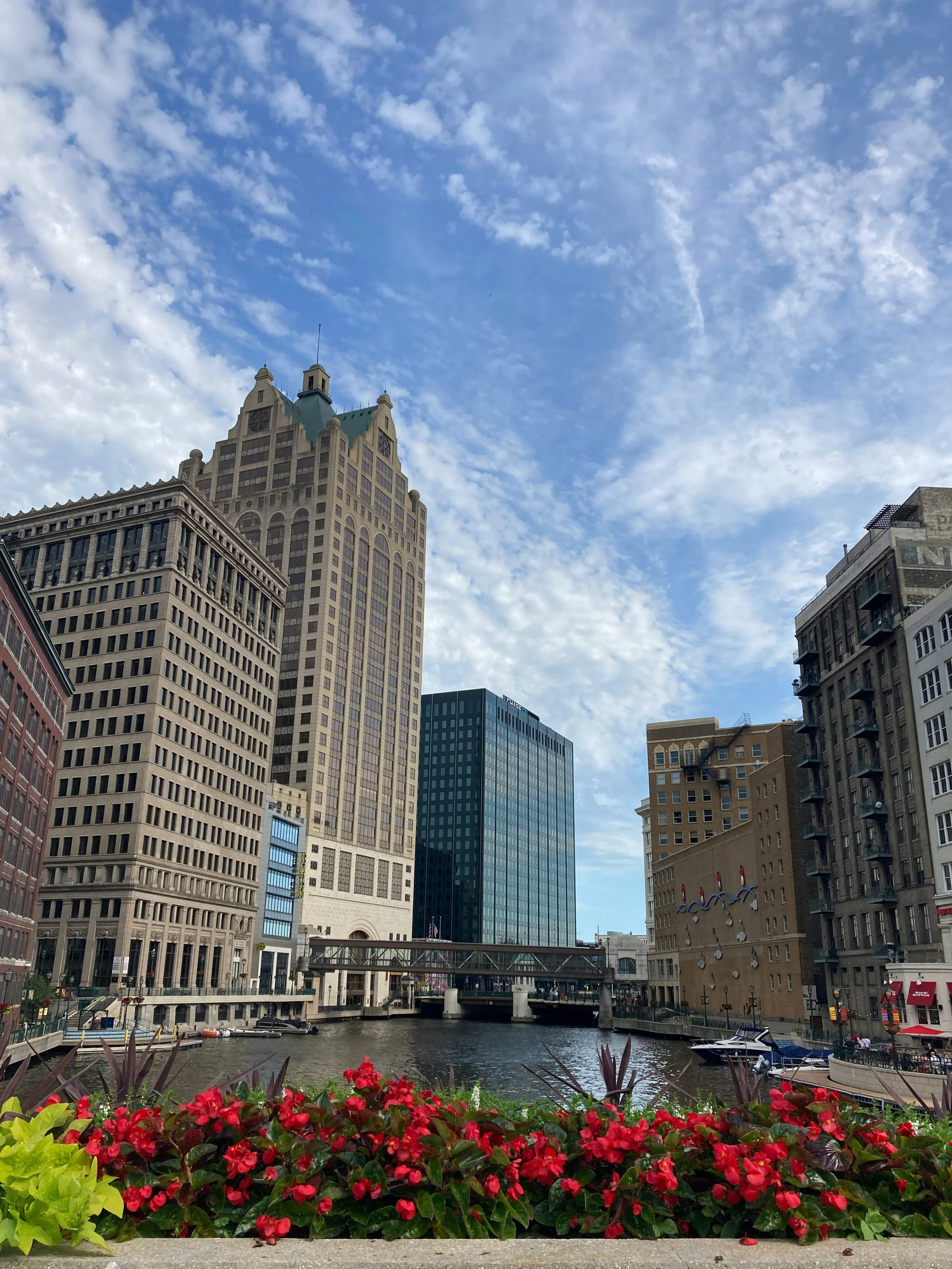
Milwaukee, Wisconsin: Early Adopters of the Blue Economy
Austin uses Milwaukee, Wisconsin, as an example of a successfully growing blue economy. Twenty or thirty years ago, Milwaukee’s business, civic, and educational leadership were among the first in the region to consider water a vital pathway to their economic futures.
Like many communities along the Great Lakes, Milwaukee is home to an Area of Concern (AOC), one of 43 areas of intense environmental degradation identified by the Great Lakes Water Quality Agreement in 1987. AOCs are a primary focus of regional environmental restoration, and some of the most frequent recipients of funding from GLRI, which was officially established in 2010.
Austin says AOC projects, which make up the biggest spending tranche of GLRI, are also the most significant in their economic payoff. By treating the most environmentally degraded places, communities that remediate their AOCs can begin to leverage the growth and development benefits of a blue economy.
The Milwaukee Estuary AOC, which is comprised of parts of the Milwaukee, Menomonee, and Kinnickinnic rivers, contains sediment contaminated by pollutants and heavy metals left over from sources like mechanical manufacturing and agricultural runoff.
Through numerous GLRI-funded projects, the City of Milwaukee has made huge strides in cleaning up this contamination, including a $450 million dredging project that will ultimately remove more than 2 million cubic yards—about 610 Olympic-sized swimming pools—of contaminated sediment from the Milwaukee Harbor and nearby rivers.
Other GLRI projects in the area have included a nearly $43 million clean-up of the Milwaukee River north of the city near Lincoln Park, a $22.9 million dredging project in the Kinnickinnic River to the south, the relocation of the South Shore beach to avoid beach closures and replenish native plant populations, and about 35 fish and wildlife projects. Milwaukee Riverkeeper Cheryl Nenn, who has been active in the Milwaukee AOC work since 2003, says that GLRI funding has been critical to cleaning up Milwaukee's waterways and beaches, leading to a dramatic increase in water-based recreation and tourism and helping to spur continued improvements to the Milwaukee Urban Water Trail, which the organization manages.
Together, these efforts have helped Milwaukee become a desirable location for “blue spaces,” or areas that center water for public enjoyment and community development, says Austin. The downtown Milwaukee RiverWalk is a prime example. In its first 20 years, the vibrant waterfront district was estimated to have generated more than $1 billion in economic development for the City of Milwaukee.
“Everybody wants to be near the water. They want to visit it. They want to walk along it. They want to have a condo that looks out over it,” Austin says. “It's very satisfying that this idea has taken off, and everybody's doing their own version of it.”
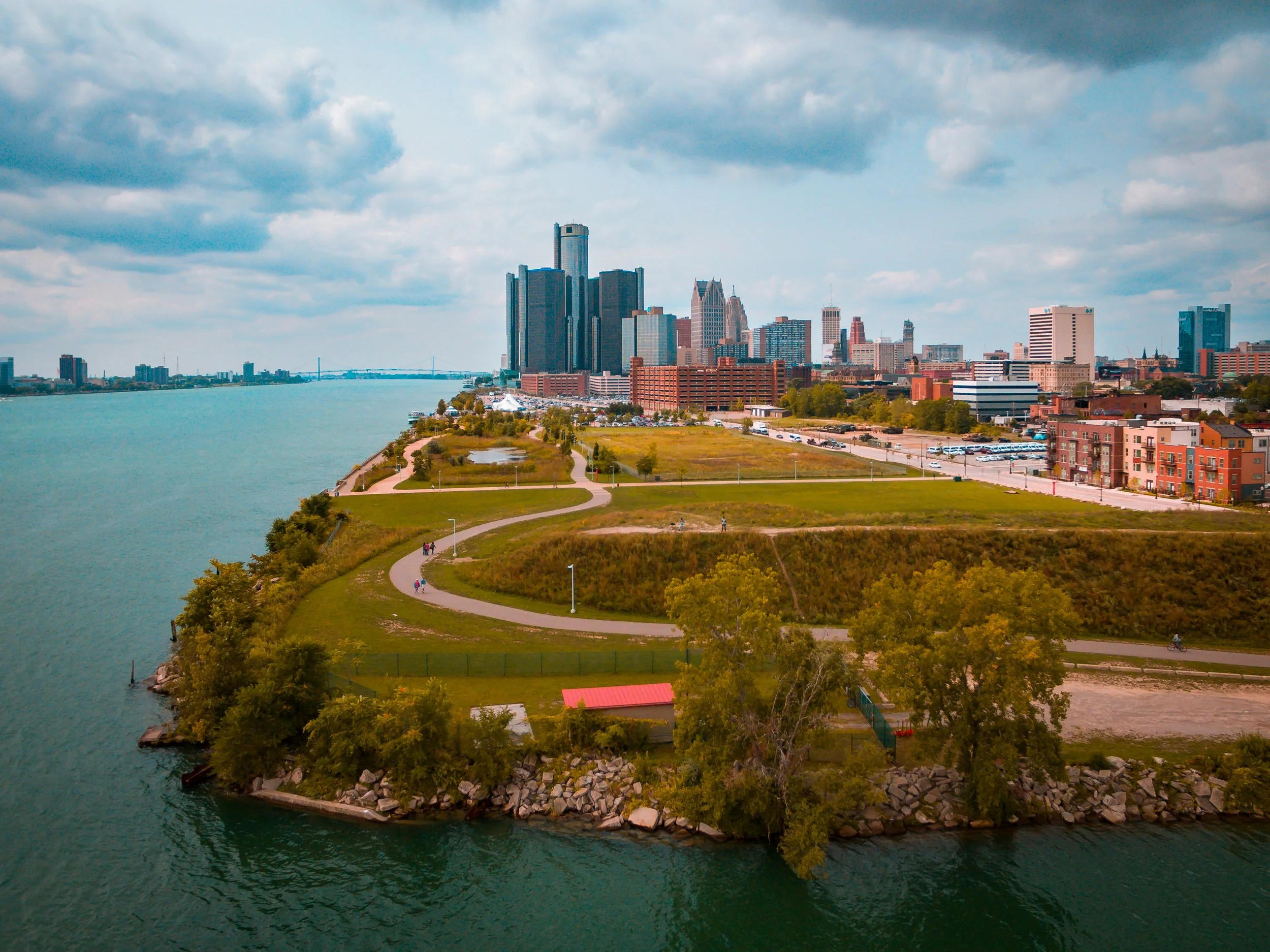
Detroit, Michigan: Increasing Access to the Great Outdoors
In addition to the shopping centers, restaurants, and other businesses that comprise shoreline development, outdoor amenities like trails, parks, and piers are also important parts of the blue economy. During the early years of Austin’s policy advocacy, environmentally savvy communities were beginning to put this in action.
“Greenways had been discovered and outdoor spaces of nature [identified] as powerful community development fulcrums,” he recalls. “When you replace messed-up [industrial refuse sites] or train tracks in [places like] downtown Detroit with greenways and trails, you create a nice fabric of the community.”
Like Milwaukee, the City of Detroit, Michigan, is home to an AOC. Prior to its environmental degradation and contamination with heavy metals, bacteria, and PCBs, the area that is now the Detroit River AOC was once home to vibrant wetlands and other important fish and wildlife habitats.
GLRI funding has contributed to numerous projects that help restore these former habitats while encouraging development and recreation along the river, including nearly $30 million to remediate contaminated sediment in the Black Lagoon, construct three new fish spawning reefs, and improve habitats near Belle Isle, Celeron Island, and Stony Island.
Through these and dozens of other projects, Michigan has taken a river that was once considered one of the most polluted in the country and made it a destination for water recreation like kayaking, canoeing, and paddleboarding. In 2015, the state partnered with a river kayaking company to rent out water recreation equipment on Belle Isle. Just three years later in 2018, the number of water recreationists renting this equipment had increased by more than 50%.
Detroit Riverkeeper Robert Burns, who was appointed to the position in 2003, says water recreationists boost the local economy by spending money on food, lodging, and supplies. In addition to beckoning kayakers, canoers, and paddleboarders, these improvements have also drawn greater numbers of anglers to visit the Detroit area for fishing tournaments, which generate up to $9.5 million each season.
These tournaments often take place near areas where habitat restoration work has taken place and serve as just one example of the ways GLRI projects secure the impressive return on investment first outlined in the analysis from the Great Lakes Economic Initiative.
“What people care about is the lifestyle,” says Austin. “That’s the ideal: to go fishing on the lake with your grandfather.”
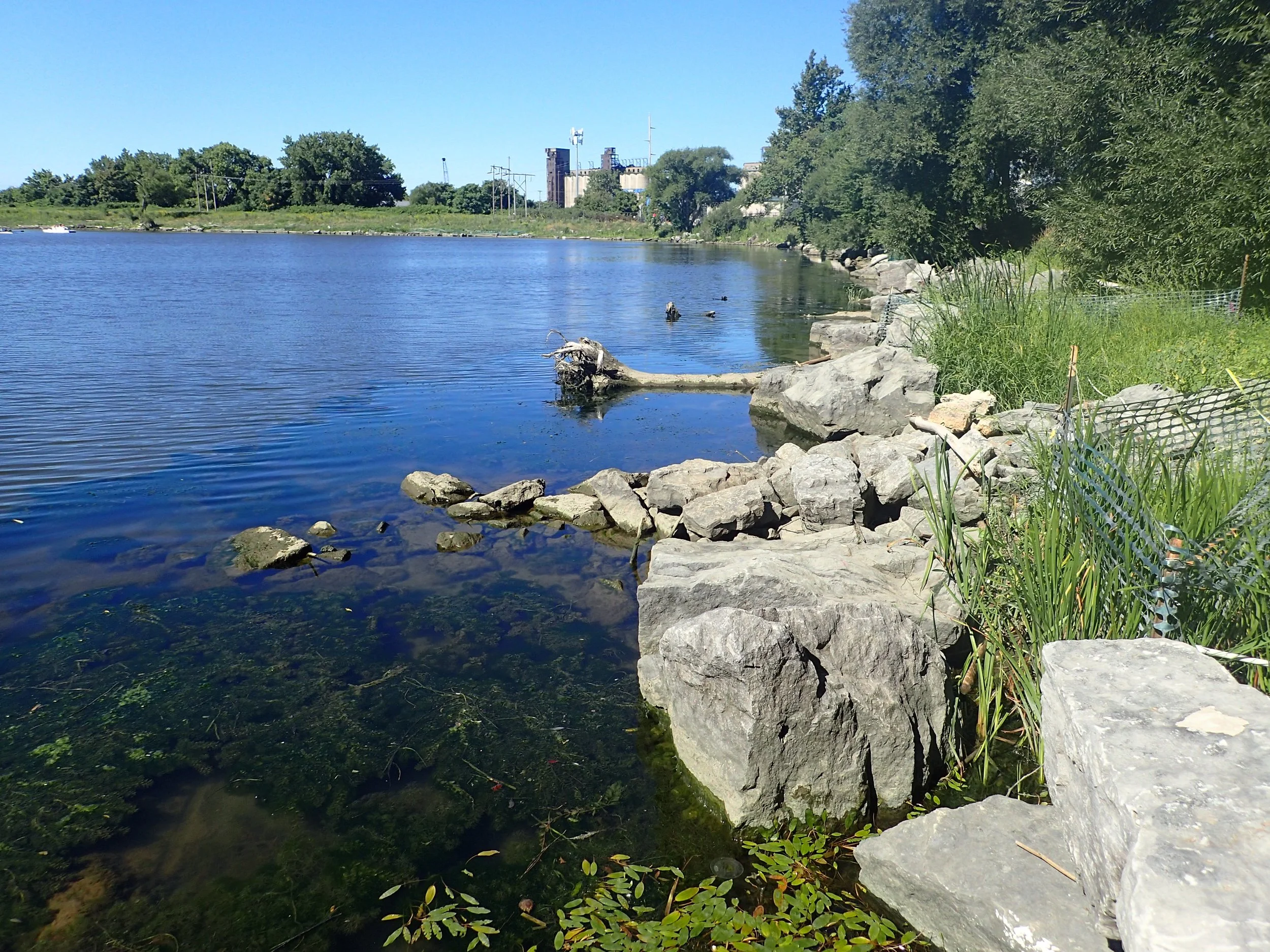
Buffalo, New York: A Growing Waterfront City
Although tourism and recreation are two important drivers of a blue economy, Austin says the single most important factor in helping a community thrive through environmental investment is simply making it a desirable place to live.
Much like the Milwaukee RiverWalk, Buffalo is home to a thriving riverside commercial district. Known as Canalside, this area has paved the way for significant revitalization since opening in 2008, and is now home to restaurants, shops, apartments, sports facilities, boat tours, outdoor seating areas, and a boardwalk.
Projects like this in Buffalo would not be possible without remediation of the Buffalo River AOC, which encompasses a six-mile stretch of river contaminated with pollutants and heavy metals from industry. So far, GLRI funding has facilitated the removal of about 1 million cubic yards of contaminated sediment—enough to fill a football field forty stories high, say project partners at the New York State Department of Environmental Conservation. Other projects include installing native fish and wildlife habitats, restoring 25,000 feet of shoreline, and removing invasive species.
These efforts, and the development surrounding Canalside, have improved downtown Buffalo enough to encourage further development along the Buffalo River. Jennifer Fee, director of communications and marketing at Buffalo Niagara Waterkeeper, says the success of these clean-up efforts has helped her organization secure grants for other local projects, including a $10 million grant from New York State to create the Buffalo Blueway water trail. Comprised of parks, piers, and ADA-accessible boat launches, the Blueway runs along the stretch of river flanked by Canalside and is a popular draw for water recreationists.
Austin says investments like these help create lively, engaged communities that can afford to invest in amenities such as parks, schools, and libraries. In turn, these amenities draw more young people, professionals, and families to live in the area.
“Here, you have a fulcrum for reanimating everything that people remember as what makes life worth living,” he says.
In Buffalo, these efforts have led to an increase in population after seventy years of decline. The 2020 U.S. Census found that Buffalo’s population had increased by 6.5%, evidence that investments like these work to create additional community development and encourage people to stay in the region.
“Where young people choose to stay and choose to go make their lives, that's where the economy goes,” says Austin.
Looking back on the predictions he made about the future of the Great Lakes region more than twenty years ago, Austin says he feels validated that such a rich and beautiful region is being recognized for all it has to offer. He hopes communities will continue to invest in environmental restoration, both for the sake of the environment itself and for the economic growth it brings to communities in the Great Lakes states and beyond.
“This is about reviving communities, growing again, and having good-paying jobs,” he says. “When you poll people in the Great Lakes states about what they care about most, what they feel most connected to, what's most defining about their way of life, the Great Lakes are number one. Always.”